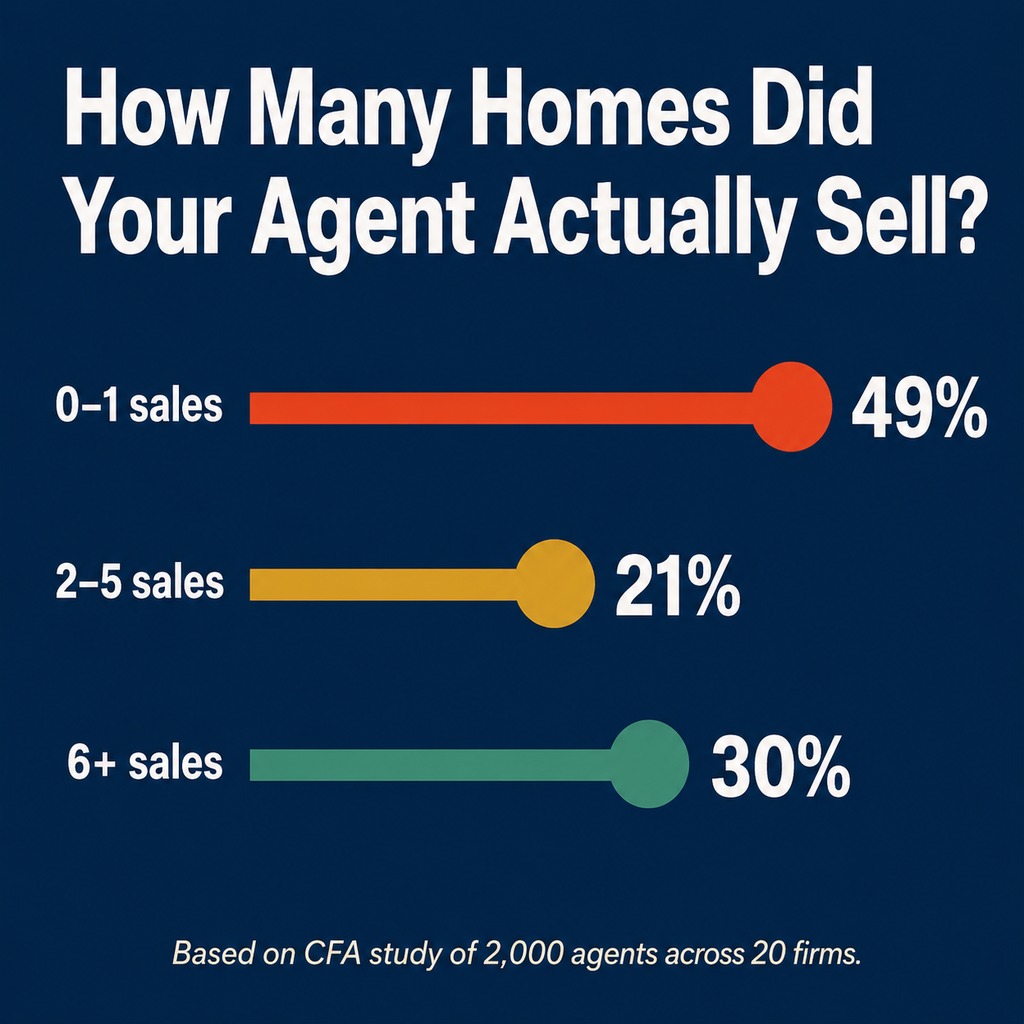
Choosing the wrong real estate agent is one of the most expensive mistakes a homeowner can make, and it happens more often than people realize. The industry has low barriers to entry and massive performance gaps between agents. A Consumer Federation of America study of 2,000 agents across 20 firms found that nearly half had zero or one sale in the prior year, and 70% had five or fewer.
At ML Real Estate Group, we sell 160 to 170 homes a year across Northern Virginia. We've seen what happens when sellers and buyers hire the wrong person. The problems are predictable, and most of them show up before you ever sign a listing agreement, if you know what to look for.
Here are the red flags that should make you think twice.
1. They Promise a Price That's Higher Than Everyone Else
This is one of the oldest tricks in real estate: the agent tells you your home is worth more than the other agents said, you feel great about it, and you sign the listing agreement. Then two months later, you're sitting on a stale listing with a price reduction.
It's called "buying the listing," and it happens all the time.
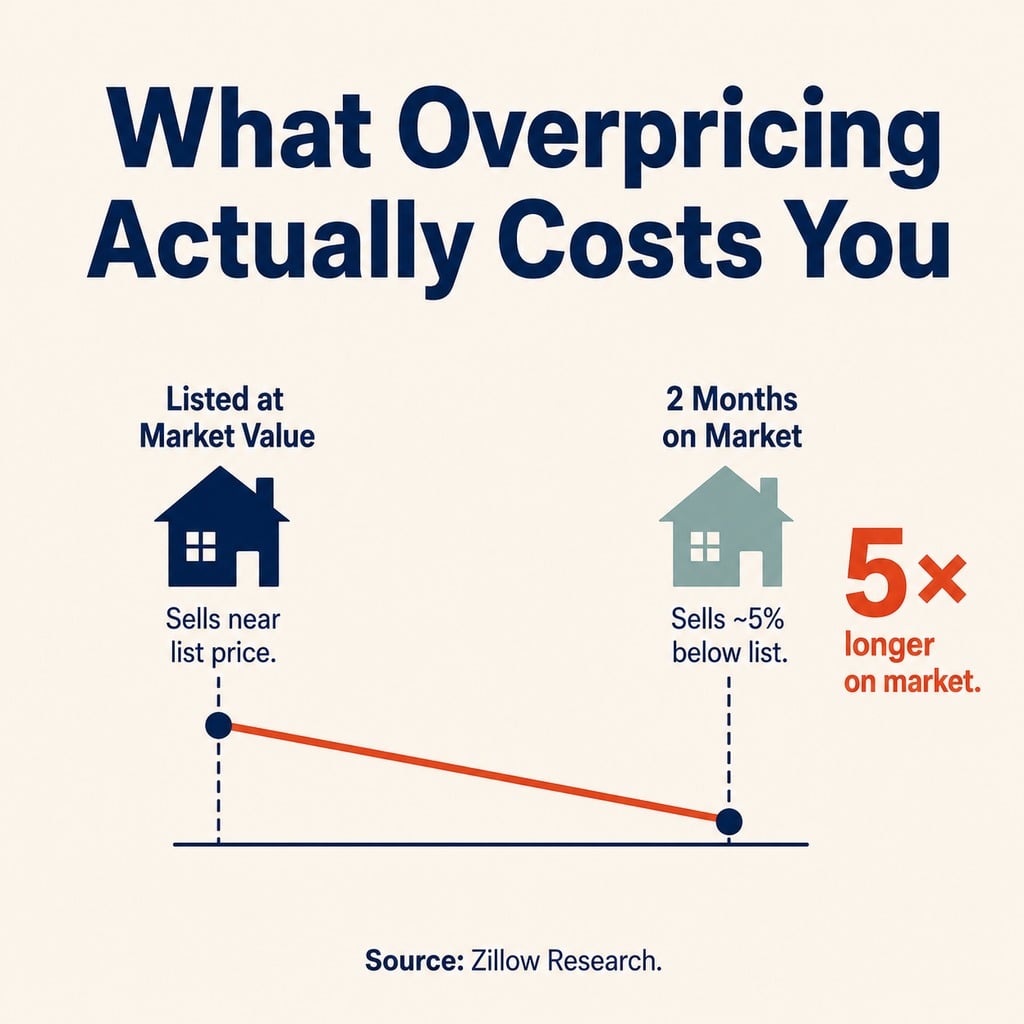
Zillow Research found that homes selling 10% below their original list price spent five times longer on the market than homes that sold at list price. After two months on market, those lingering homes tended to sell about 5% below list. Research from the Wharton School found similar results: setting a list price 20% above market value reduced the probability of a quick sale by 20% to 30%.
The right agent will show you recent comparable sales, explain the competitive landscape, and tell you a price they can defend, not just one that sounds good in the listing presentation. If every other agent says your home is worth $650,000 and one agent says $725,000 with no new data to back it up, that agent is not more optimistic. They're less honest.
What to ask instead: "Can you walk me through the comps that support this price? What happens if we don't get an offer in the first two weeks?"
2. They Can't Explain Their Pricing Strategy Beyond the Number
Even when the price itself is reasonable, watch how the agent talks about it. A good agent doesn't just pick a number. They choose a pricing position designed to attract the right buyers, create competition, and hold up at appraisal.
A study published in the Journal of Economic Psychology found that precise pricing (for example, $647,000 instead of $650,000) produced higher final sale prices and smaller discounts during negotiation. "Just below" pricing ($649,900) actually produced the worst negotiated outcomes for sellers.
You don't need your agent to cite academic research. But you need them to explain why they picked that specific number, what buyer pool it's designed to attract, how it positions against competition, and what the plan is if the market doesn't respond. If they can't, they don't have a strategy. They have a guess.
3. Their Marketing Plan Is "Put It in the MLS and Wait"
When you ask an agent how they'll market your home, the answer should be specific and detailed. If it's vague ("we'll get it on the MLS and do some social media"), that's a problem.
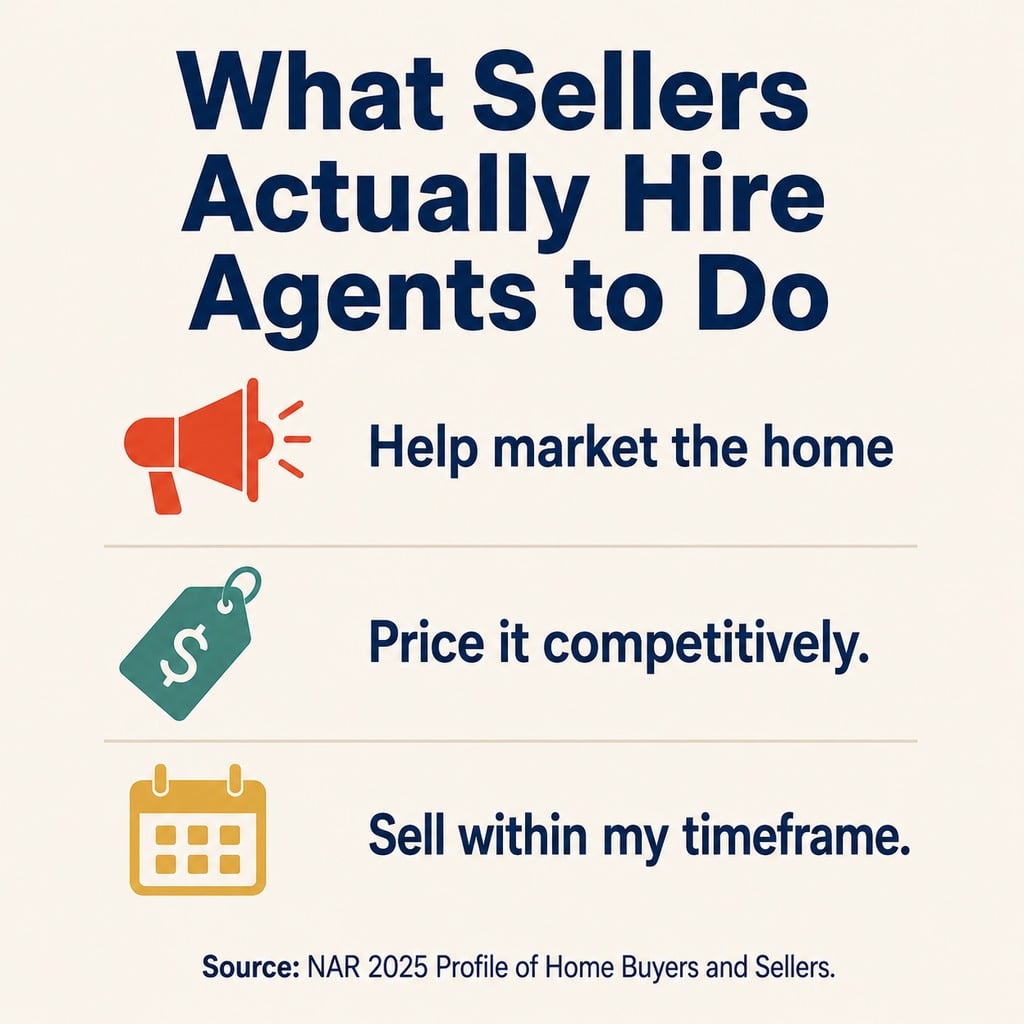
NAR's 2025 data shows that 81% of buyers rated listing photos as the most useful feature in their online home search. Sellers' top priorities when hiring an agent were help marketing the home, pricing it competitively, and selling within a specific timeframe.
The MLS is the starting line, not the finish line. A real marketing plan includes professional photography, video and virtual tours, a pre-marketing or "coming soon" phase to build interest, social media advertising with a defined budget and audience, email campaigns to agent networks and buyer databases, an open house strategy, and a timeline that maps all of it out before you go live.
We include professional staging, photography, videography, and 3D virtual tours on every listing because we've seen what happens when you skip those steps. Buyers scroll past listings with bad photos. It doesn't matter how nice the house is if the first impression online doesn't stop someone mid-scroll.
What to ask instead: "Can you show me the marketing plan you used on your last three listings? What platforms did you use, and what kind of exposure did those homes get?"
4. They Dismiss Staging or Say Buyers Can "Look Past It"
If an agent tells you staging doesn't matter, that buyers will "see the potential," or that your furniture is fine as is, pay attention. That agent is either uninformed or unwilling to do the work.
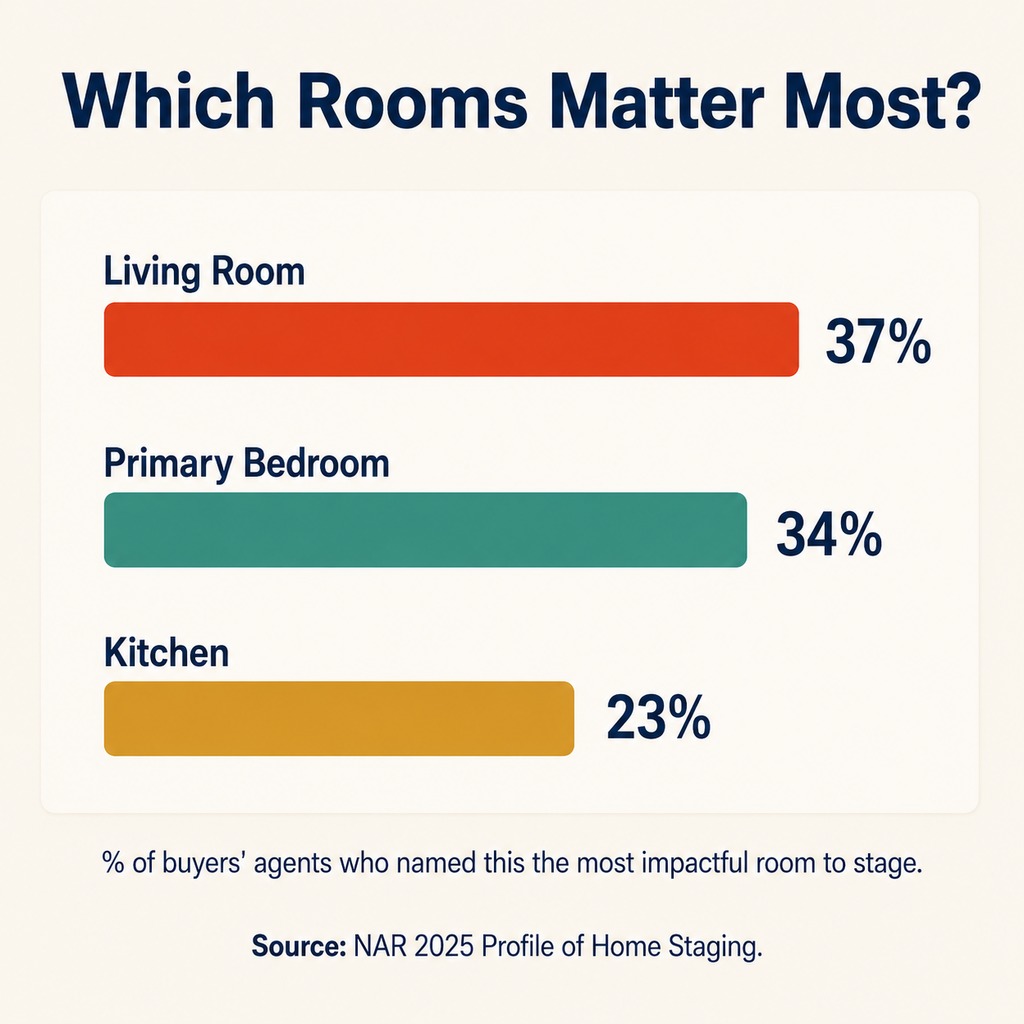
NAR's 2025 Profile of Home Staging found that 83% of buyers' agents said staging made it easier for buyers to visualize the property as a future home. About 29% of agents reported a 1% to 10% increase in the dollar value offered on staged homes, and roughly half of seller-side agents said staging reduced time on market.
The living room was the most impactful room to stage (37%), followed by the primary bedroom (34%) and kitchen (23%).
Staging is a sales strategy, not decoration. A staged home photographs better, shows better in person, and helps buyers emotionally connect to the space. That connection drives higher offers.
Not every home needs a full staging overhaul. Sometimes it's light prep work: decluttering, paint touch-ups, rearranging furniture. The red flag isn't that the agent skips full staging. It's that they dismiss preparation entirely or treat it as an afterthought instead of a core part of the selling process.
5. They Want to Keep Your Listing Off the Open Market
There are legitimate reasons to sell off-market: privacy concerns, unique circumstances, or a specific pre-marketing strategy with a defined timeline to go public. But if an agent's default approach is to limit your home's exposure, that should concern you.
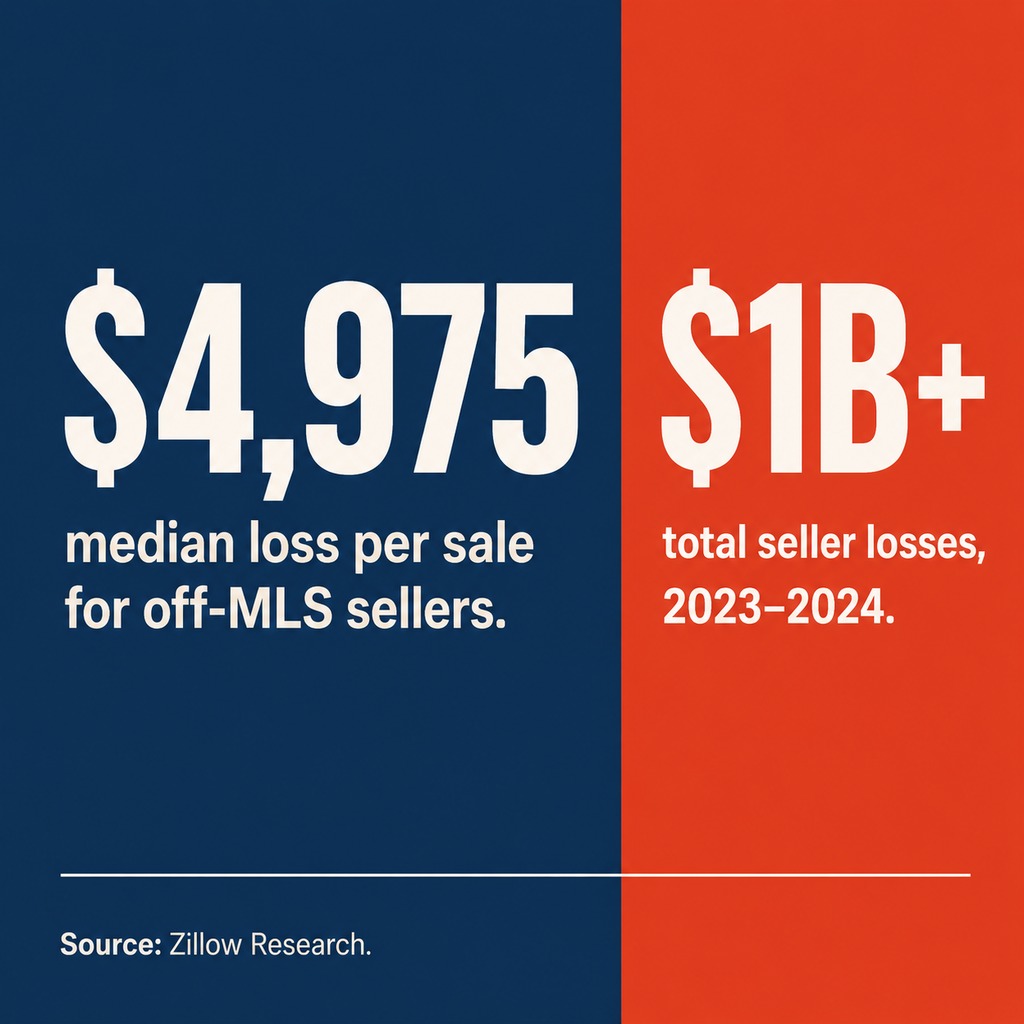
Zillow Research reported that sellers who sold off the MLS in 2023 and 2024 typically netted $4,975 less than comparable homes listed on the MLS, a median loss of 1.5% nationwide. Across those two years, the aggregate losses exceeded $1 billion.
More exposure generally means more competition, more offers, and a better price. If an agent suggests keeping your listing within a smaller network, ask them to explain exactly what you're gaining and what you're giving up. If they can't quantify the tradeoff, they're likely prioritizing their convenience over your net proceeds.
6. They're Hard to Reach Before They Even Have the Business
Communication is not a soft skill in real estate. It's one of the top reasons clients fire agents, and one of the top reasons they hire them.
Zillow's seller research found that a responsive first impression was "highly important" to 80% of sellers. Their buyer research found that text (34%), phone (33%), and email (20%) were the most preferred communication channels, meaning buyers and sellers want agents who can meet them where they already communicate.
If the agent takes days to return your call during the interview process, sends vague or generic responses, or can't tell you exactly how they'll keep you updated during the transaction, you're seeing the best version of their communication. It only goes downhill from here.
A strong agent will tell you upfront: who communicates with you, how often, through which channels, and what happens when there's an offer, an inspection issue, an appraisal gap, or a title delay. If they can't describe that system, they probably don't have one.
Our team has a dedicated client care specialist, a transaction coordinator, and a staging coordinator, each responsible for a specific part of the process. Sellers get weekly updates, immediate feedback after showings, and direct access to the person handling their concern. That kind of structure keeps things from falling through the cracks.
7. They Talk Like a Top Producer but Can't Show You the Numbers
Confidence is easy. Competence takes receipts.
The real estate industry has a wide gap between what agents project and what they actually produce. NAR's 2025 member data shows that agents with two years or less of experience earned a median gross income of $8,100, and 62% of those newer agents made under $10,000. The Consumer Federation of America found that the median agent in their sample of 2,000 had just two sales.
That doesn't mean newer agents can't do a good job. But it does mean you should verify, not assume. Ask for their actual recent transaction history: how many homes they sold in the past 12 months, their average days on market, their sale-to-list price ratio, and the price range they typically work in.
If the answer is vague ("I've been really busy") or pivots to their brokerage's numbers instead of their own, keep asking. You're hiring a person, not a logo.
8. They Can't Explain How They Negotiate
Negotiation is where the real money is made or lost in a transaction, but many agents can't describe their approach beyond "I'm a tough negotiator" or "I fight hard for my clients."
A well-known study from MIT and the University of Chicago found that real estate agents selling their own homes sold for 3.7% more and kept those homes on market 9.5 days longer than when selling clients' homes. That gap suggests some agents know what's possible but don't always deliver it for their clients.
A good agent should be able to walk you through how they handle common scenarios:
- Multiple offers come in. How do they structure the process?
- The inspection reveals a significant issue. What's their strategy for repair negotiations?
- The appraisal comes in low. How do they protect the deal without giving away your leverage?
- A buyer wants an extended closing timeline. When do they trade time for price, and when don't they?
If the agent can only describe negotiation in terms of personality ("I'm aggressive" or "I don't back down"), they're selling attitude, not skill.
9. They Brag About Volume but Won't Talk About Results
High transaction volume can be a good sign. It usually means the agent is active, experienced, and trusted enough to generate repeat and referral business. But volume alone doesn't tell you what happened for the sellers.
A 2022 study in the Journal of Housing Research found that the most active listing agents sold homes 14 days faster on average, but at prices about 8% lower. That doesn't mean high-volume agents are bad. It means some may be optimizing for speed and turnover rather than maximizing each client's outcome.
The question is not just "How many homes did you sell?" It's "How did your sellers do?"
| What to Ask | Why It Matters |
| What's your average sale-to-list price ratio? | Shows whether they price well and negotiate effectively |
| How often do your listings need a price reduction? | Reveals whether initial pricing is strategic or hopeful |
| What's your average days on market? | Context matters: fast sales are good, but not if the price was too low |
| How many of your recent sales involved concessions? | Frequent large concessions may signal weak negotiation |
Our average sale comes in at 100.5% of listing price, which means our homes typically sell at or above asking. That's not luck. It's strategic pricing, proper preparation, and marketing aggressive enough to create competition.
10. They're Casual About Contracts, Disclosures, and Compliance
Real estate transactions involve legally binding contracts, disclosure requirements, and regulatory obligations. In Virginia, the Real Estate Board (under DPOR) has the authority to impose fines, require remedial education, suspend licenses, or revoke them entirely.
Getting a real estate license in Virginia requires 60 hours of pre-license education and passing the state exam. That's less than two college courses. Licensing is the floor, not the ceiling.
The red flag here isn't that the agent makes a mistake. It's that they treat contracts, timelines, and disclosures casually, as if they're just paperwork rather than the legal framework protecting you. An agent who rushes through contingency explanations, glosses over disclosure requirements, or doesn't have a clear system for tracking deadlines is a liability.
A good agent (or team) can explain their contract workflow, their approach to disclosures, how they handle escalation when something goes sideways, and what quality control looks like on their end. If that conversation makes their eyes glaze over, find someone who takes it seriously.
How to Use These Red Flags in Your Agent Interviews
Most of these red flags show up during the listing presentation or buyer consultation. That meeting is your best opportunity to evaluate the agent on the criteria that actually matter: pricing discipline, marketing capability, communication systems, negotiation process, and operational rigor.
Here's a quick framework for your interviews:
| Category | What to Evaluate | Green Flag |
| Pricing | Can they defend their price with data? | Shows comps, explains strategy, discusses appraisal risk |
| Marketing | Do they have a specific, written marketing plan? | Professional photos, video, staging, multi-channel distribution |
| Communication | How do they keep you informed? | Named contacts, defined cadence, multi-channel availability |
| Negotiation | Can they walk through real scenarios? | Describes process, not just personality |
| Production | Will they share actual performance metrics? | Sale-to-list ratio, days on market, recent transaction list |
| Process | Do they have systems for contracts and compliance? | Transaction coordination, deadline tracking, disclosure protocols |
Interview at least two or three agents. Compare not just what they promise, but how they explain their process. The agents who can get specific are usually the ones who actually have a process worth explaining.
Ready to Interview Us?
If you're selling a home in Northern Virginia or looking to buy, we'd welcome the chance to sit down and walk you through exactly how we work. We're happy to answer every question on this list, show you our numbers, and explain our process in detail.
That's what a team built to handle this should be able to do.
Give us a call at (571) 357-0695 or reach out online to schedule a no-obligation consultation.
Check out this article next